Korean Bibimbap
Highlighted under: Authentic Recipes
Experience the vibrant flavors and textures of Korean cuisine with this traditional Bibimbap recipe. A colorful medley of vegetables, rice, and meat, topped with a deliciously spicy sauce.
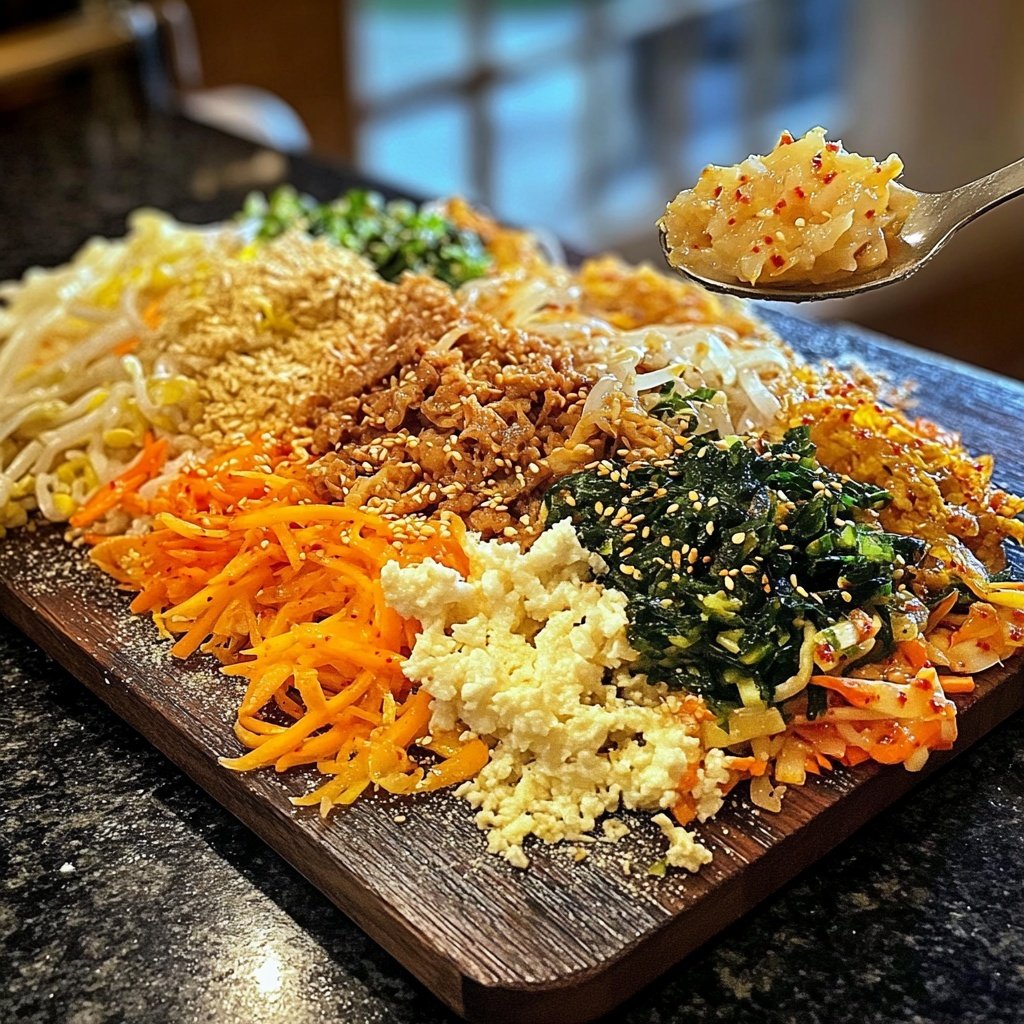
Korean Bibimbap is not just a meal; it's an art form. Each ingredient is carefully selected for its flavor, color, and texture, creating a dish that's as beautiful as it is delicious. From the perfectly cooked rice to the array of vegetables and the savory meat, every bite is a celebration of Korean culinary tradition.
Why You Will Love This Recipe
- A colorful array of fresh vegetables for a nutritious meal
- Customizable to your taste with various toppings
- Perfect balance of flavors and textures
The Essence of Bibimbap
Bibimbap is a quintessential Korean dish that translates to 'mixed rice'. Its roots can be traced back to ancient times, where it was traditionally eaten during celebrations and festivals. The dish is characterized by its vibrant assortment of ingredients, offering not just a feast for the eyes but also a wealth of nutritional benefits. The combination of fresh vegetables, protein, and rice provides a complete meal that is both satisfying and healthy.
At its core, bibimbap is about balance. The harmonious blend of textures—from the crunch of the vegetables to the tenderness of the meat or tofu—creates a delightful eating experience. Each bite brings together flavors that are savory, spicy, and umami-rich, making it an unforgettable dish that can appeal to a variety of palates.
Customizing Your Bibimbap
One of the best aspects of bibimbap is its versatility. You can easily customize this dish based on your dietary preferences or seasonal ingredient availability. Whether you prefer meat, seafood, or plant-based proteins, bibimbap can cater to all. Popular choices include bulgogi beef, grilled chicken, or even crispy tofu for a vegetarian option.
Moreover, feel free to experiment with the vegetables you use. While the classic recipe calls for spinach, carrots, and zucchini, you can include bell peppers, radishes, or even pickled vegetables for an added zing. The key is to maintain a variety of colors and textures to create an appealing and nutritious meal.
Serving Suggestions
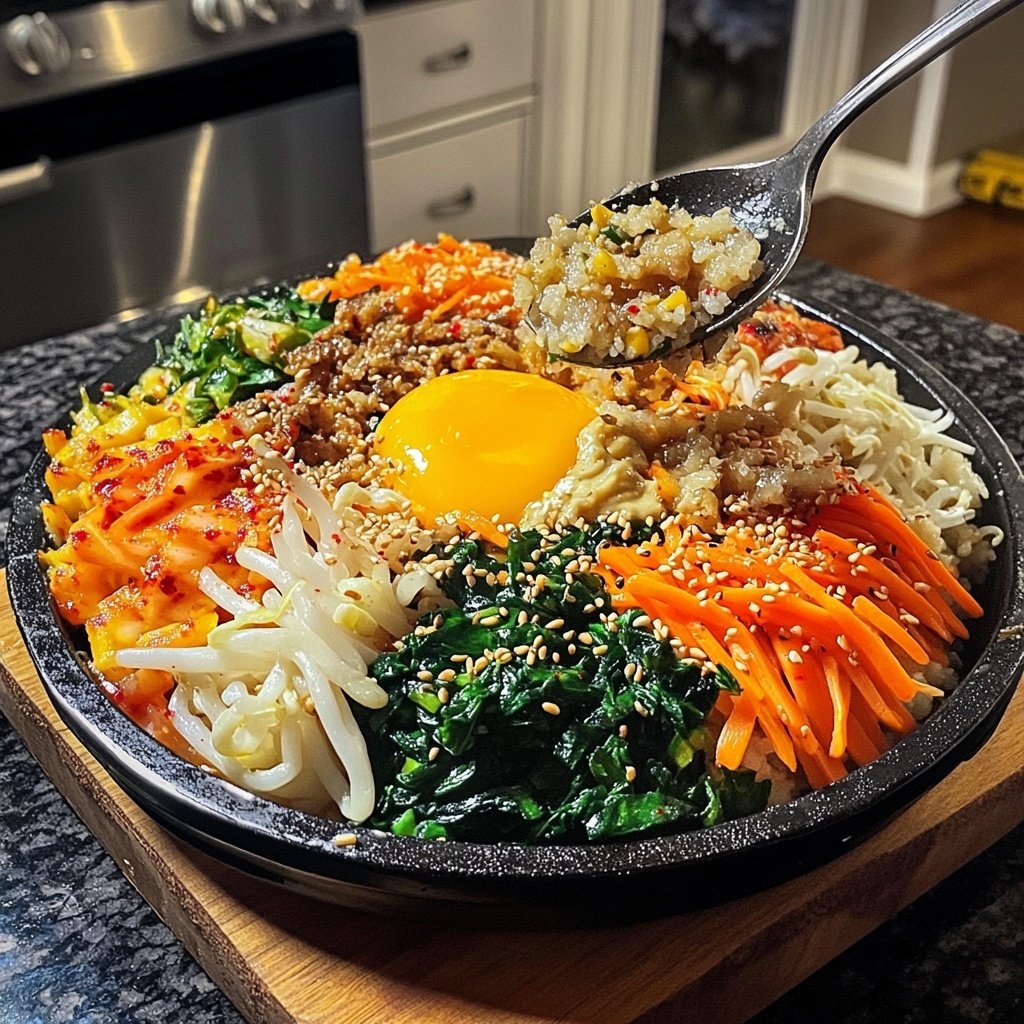
Bibimbap is typically served in a hot stone bowl, which adds a delightful crispy texture to the rice as it cooks slightly from the heat. If you don’t have a dolsot (stone bowl), any regular bowl will work just fine. The beauty of this dish lies in its communal nature. Consider serving it family-style, where everyone can mix their own bowls, making the meal interactive and fun.
Don’t forget the essential condiment: gochujang, a spicy-sweet Korean chili paste that elevates the dish to new heights. A drizzle over the top just before mixing ensures every bite is packed with flavor. You can also offer additional toppings like sesame seeds, sliced green onions, or even a sprinkle of nori for a unique twist.
Ingredients
For the Bibimbap
- 2 cups cooked white rice
- 1 cup spinach, blanched and chopped
- 1 cup carrots, julienned
- 1 cup zucchini, julienned
- 1 cup shiitake mushrooms, sliced
- 1 cup bean sprouts, blanched
- 4 eggs
- 1 cup ground beef or tofu
- 2 tablespoons sesame oil
- Salt to taste
- Gojujang (Korean chili paste) for serving
Feel free to add any of your favorite vegetables or proteins!
Instructions
Prepare the Vegetables
Heat sesame oil in a pan over medium heat. Sauté each vegetable separately, seasoning with salt, until tender. Set aside.
Cook the Beef or Tofu
In the same pan, cook the ground beef or tofu until fully cooked. Season with salt and set aside.
Fry the Eggs
Fry the eggs sunny-side up in a separate pan until the whites are set but the yolks are still runny.
Assemble the Bibimbap
In a bowl, place a serving of rice and arrange the sautéed vegetables, beef or tofu, and a fried egg on top. Drizzle with gochujang before serving.
Mix all ingredients together before eating for a burst of flavor!
Pro Tips
- For an extra kick, add more gochujang or serve with kimchi.
Nutritional Benefits
Bibimbap is not only delicious but also incredibly nutritious. Packed with a variety of vegetables, it offers a wealth of vitamins, minerals, and dietary fiber. The inclusion of protein, whether from meat or tofu, ensures that the dish is filling and can help keep you energized throughout the day.
Additionally, the use of sesame oil not only enhances the flavor but also provides healthy fats that are beneficial for heart health. When combined, these ingredients create a well-rounded meal that can support a balanced diet.
Storage and Reheating
If you happen to have leftovers, bibimbap can be stored in the refrigerator for up to three days. To maintain the quality of the ingredients, it's best to keep the components separate until you're ready to eat. When reheating, use a microwave or a stovetop to warm the rice and vegetables gently, ensuring they retain their texture and flavor.
For a quick meal, you can also transform leftover bibimbap into a stir-fry. Simply sauté the ingredients together in a pan for a few minutes, adding a bit more sesame oil or gochujang for extra flavor. This way, you can enjoy the deliciousness of bibimbap in a new form!
Questions About Recipes
→ Can I make Bibimbap vegetarian?
Yes! Simply replace the meat with tofu or extra vegetables.
→ What can I use instead of gochujang?
You can use sriracha or any other spicy sauce, but the flavor will differ.
→ How can I store leftovers?
Store the components separately in airtight containers in the refrigerator for up to 3 days.
→ Can I use brown rice instead of white?
Absolutely! Brown rice will add more fiber and a nuttier flavor.
Korean Bibimbap
Created by: Quincy Harper
Recipe Type: Authentic Recipes
Skill Level: Intermediate
Final Quantity: 4 servings
What You'll Need
For the Bibimbap
- 2 cups cooked white rice
- 1 cup spinach, blanched and chopped
- 1 cup carrots, julienned
- 1 cup zucchini, julienned
- 1 cup shiitake mushrooms, sliced
- 1 cup bean sprouts, blanched
- 4 eggs
- 1 cup ground beef or tofu
- 2 tablespoons sesame oil
- Salt to taste
- Gojujang (Korean chili paste) for serving
How-To Steps
Heat sesame oil in a pan over medium heat. Sauté each vegetable separately, seasoning with salt, until tender. Set aside.
In the same pan, cook the ground beef or tofu until fully cooked. Season with salt and set aside.
Fry the eggs sunny-side up in a separate pan until the whites are set but the yolks are still runny.
In a bowl, place a serving of rice and arrange the sautéed vegetables, beef or tofu, and a fried egg on top. Drizzle with gochujang before serving.
Extra Tips
- For an extra kick, add more gochujang or serve with kimchi.
Nutritional Breakdown (Per Serving)
- Calories: 500 kcal
- Total Fat: 20g
- Saturated Fat: 4g
- Cholesterol: 186mg
- Sodium: 780mg
- Total Carbohydrates: 70g
- Dietary Fiber: 4g
- Sugars: 5g
- Protein: 18g